About Us

Welcome to the Brown County Historical Society. Located in the heart of Nashville, Indiana, our core mission is simple: to collect, preserve, and present the history of Brown County. We serve as the guardians of our region’s unique pioneer heritage, offering visitors an engaging journey into the past through our carefully maintained history center and immersive historical exhibits.

Preserving Our Frontier Heritage

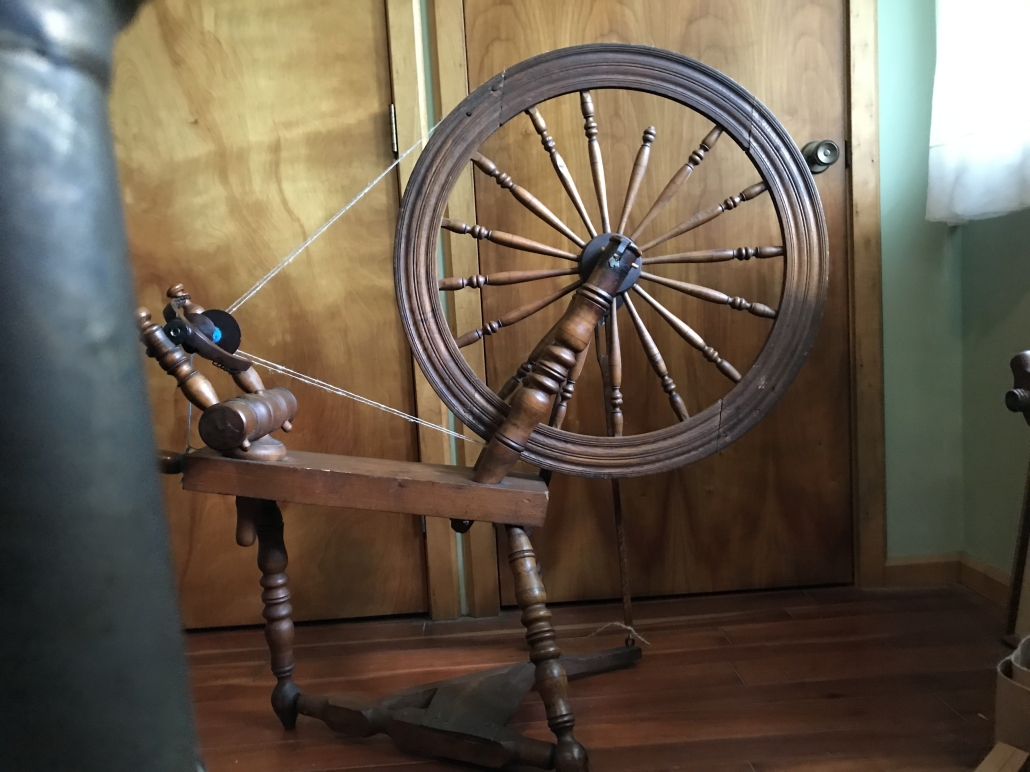
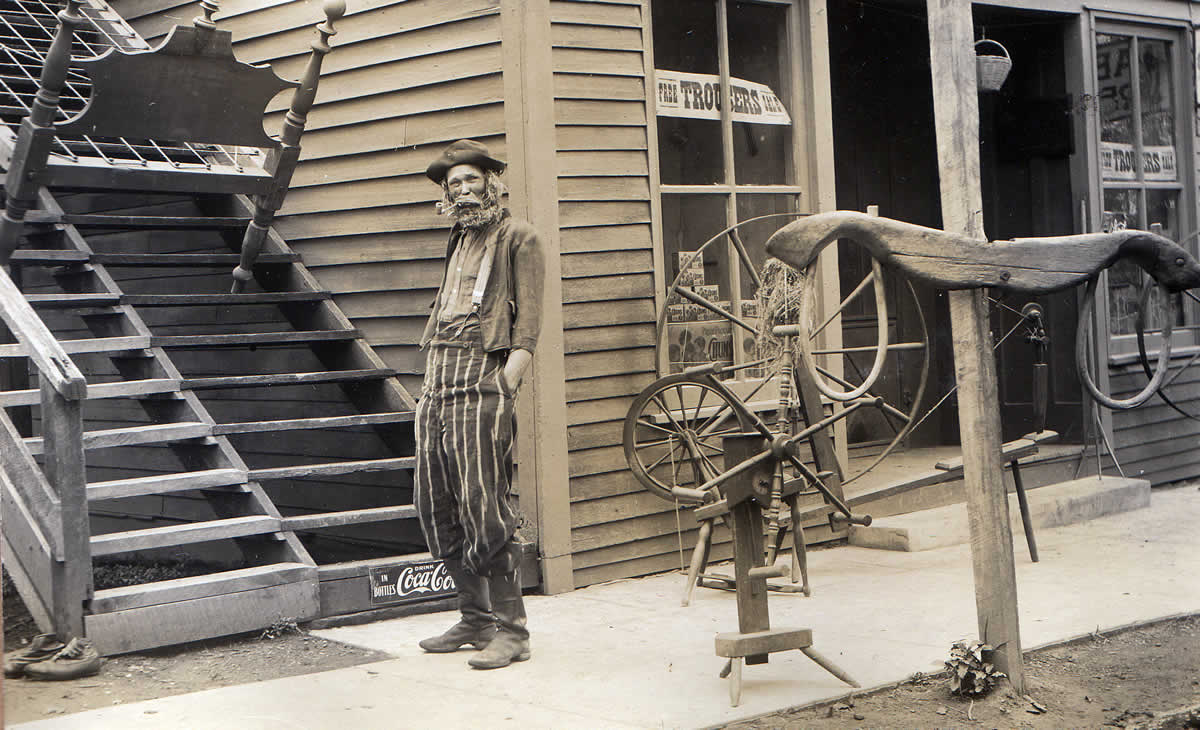
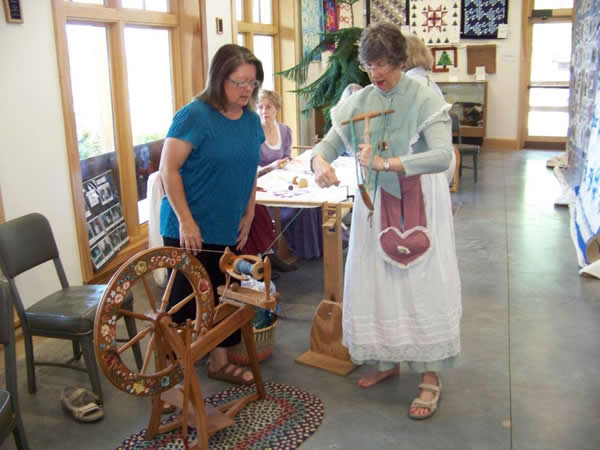
We are dedicated to safeguarding the artifacts, structures, and stories that define early Hoosier life. Step back in time by exploring our grounds, which feature authentic, preserved structures like the Old Log Jail, originally built in 1837 to maintain law and order on the frontier. Whether you are examining traditional domestic crafts, such as spinning on antique wooden wheels, or exploring rustic pioneer tools, our collections breathe life into the daily experiences of early settlers.

The History Center Building

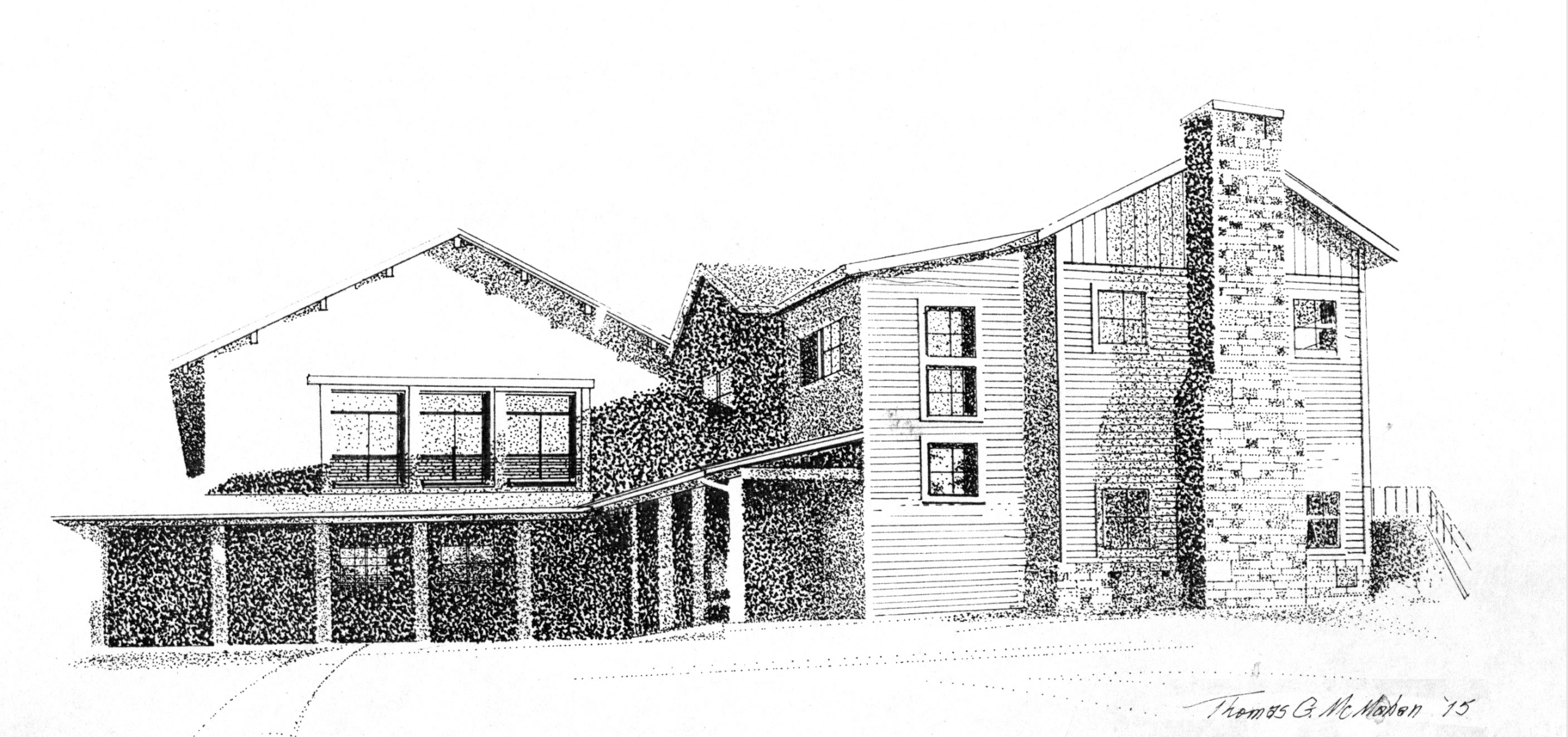
Brown County Indiana History Center

Brown County History Center Dedication

Sunday, April 26, 2015

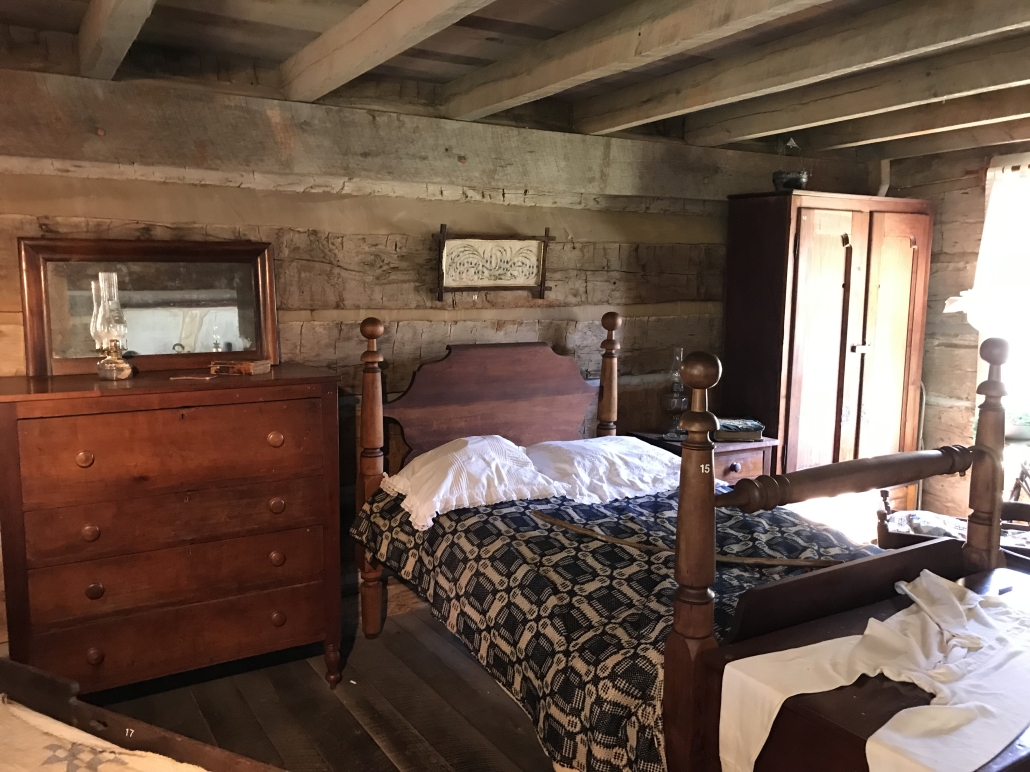
When visitors enter the new History Center, the first question is, “Where did all of this come from?” For the Gnaw Bone Cabin, the answer is, “right here in Brown County – local materials and local workmen.” A log cabin from Freeman Ridge was donated by the Nature Conservancy, dismantled and reconstructed within the new building by Darin Kean, Jim McGrayel and crew. Wide poplar boards for shelves and trim came from the Deadfall School, barn wood trim from the 1887 Mary Thompson barn on Valley Branch Road, fireplace stone from a cellar house on the William Barnes homestead on Owl Creek. Additional stone came from a fireplace at the Eudora Kelley house on West Main Street. The expert craftsmen of Paul Bay and Sons Masonry installed the stone for the building.

The dedication will celebrate all of the workmen who skillfully constructed a new Nashville landmark and thank hundreds of donors. A special presentation of the Grover Brown Award for outstanding contribution to Brown County history and unveiling of a 5’x7′ colorful leaded glass quilt, engraved with donor names, will highlight the event. Opening exhibits at the History Center include “Wash Day” in the Gnaw Bone Cabin, Art Alliance show in the Zimmerman Room, works of art donated to the permanent collection in the Howard Hughes Art and Exhibit Hall. After the ribbon cutting, guests are invited to tour the galleries and enjoy a reception in the Grand Hall.

Democrat article re. opening of History Center on April 26, 2015

FUTURE OF HISTORY Ribbon cut on $5 million center, which is now open to host events BY SUZANNAH COUCH scouchbcdemocrat.com The Brown County History Center is officially open. A  crowd joined members of local government and the Brown County Historical Society for a ribboncutting and reception April 26. Historical society President Ivan Lancaster, Treasurer Alice Lorenz and Pioneer Women President Brenda Main all took turns cutting the ribbon, which was handmade by the Pioneer Women. “This day itself is history. Yesterday is history.

We want to preserve every day right here in this building,” town council President Charles “Buzz” King told the large crowd gathered outside the center on East Gould Street. People watched over the ceremony from the large windows on the second floor of the center, also. “I smile every day when I drive by this wonderful building,” Diana Biddle said. Biddle is not only a county commissioner but also the Brown County historian and a genealogist. She works in the County Office Building across the street on the second floor.

“Welcome to the neighborhood,” she told society members. The Grover Brown Award was given to Paul Bay and Sons Masonry. The company installed more than 100 tons of Brown County stone in and on the building. The society established the award for outstanding contributions to Brown County history. It is named for Grover Brown, who was a teacher, principal and superintendent of Brown County Schools.

It honors a family or business that helps preserve or “pass on the tradition and history of Brown County,” Lancaster said. Past recipients include Andy Rogers, the Brown County Public Library and the Jack McDonald family. “Their work to find the best stone possible and carefully place each piece on the facade and fireplace will be recognized for years to come as an example of fine craftsmanship carried on by five generations of Brown County stone masons,” Lancaster said. An art glass quilt was unveiled during the ceremony in the History Center. It was created by Brown County Historical Society Vice President Pete Bullard.

Bullard incorporated the names of 466 donors who contributed to the construction of the History Center. Fundraising for the $5 million project started six years ago. Staff photos by Suzannah Couch TOP: Brown County Historical Society President Ivan Lancaster, left, and Pioneer Women President Brenda Main hold a ribbon cut during the History Center’s dedication and celebration ceremony April 26. ABOVE: Brown County Historical Society President Ivan Lancaster, third from the right, and Treasurer Alice Lorenz pose with Paul Bay and Sons employees, the recipient of the Grover Brown Award. Paul Bay and Sons installed more than 100 tons of Brown County stone in the building.

Brown County History Center Facts

  • 18,000 Square Foot building.
    Architect: Kirkwood Design
    General Contractor: Dunlap Company
  • Woods used: Tulip poplar trim, cherry and walnut doors.Cedar siding and solid cedar porch posts.
    White oak floor in Grand Hall. Oak stairs with walnut trim.
  • 100 tons of Brown County Stone installed by local artisans, Paul Bay and Sons.
  • 800 cubic yards of concrete for footers, floors, walls.
  • 36 tons of reinforcing steel within concrete
  • 91 tons of structural steel
  • 1200 sheets of 4’x12′ drywall
  • 48,000 feet of wiring
  • 250 light fixtures with various types of energy efficient bulbs.
  • A high efficiency variable refrigerant flow system with zone control will keep the building comfortable.
  • Building is completely ADA .accessible.

Gnaw Bone Cabin Room

Oak logs are from an 1860 era cabin on Freeman Ridge near Bear Wallow Hill. Donated by Indiana Nature Conservancy.

Antique 1″x12″ po·plar boards used for window trim, shelves, and wall above logs are alleged to have been salvaged from Deadfall School. Donated by George Monroe.

Barn wood is from the 1887 Mary Thompson barn on Valley Branch Road. Donated by Gnaw Bone Camp.

Flooring is oak and beech random width 1″ boards reclaimed from antique barns.

Fireplace stone is from a cellar house located on the William Barnes farm, Owl Creek Road. It is some of the best stone they have ever found according to masons Paul Bay and Sons. Donated by Jack and Nancy Kenley.

Room signs are red cedar slices.

Histories of Brown County

A History of Brown County

Dorothy B. Bailey, Archivist
Brown County Historical Society
January 14, 1985

The United States acquired land from the Indians, part of which forms the southwest section of what is now Brown County, in the 1809 treaty of Fort Wayne. By the treaty of St. Mary’s in 1818, considerably more territory became the property of the government, and this included Brown County land. No settler was allowed in the area until the government survey was completed in 1820.

Brown County Indiana

The first white man known to arrive was a German, Johann Schoonover, who lived for a short time on the creek, later named for him, to trade with the Indians, about 1820. In that same year William Elkins, the first pioneer, built a log cabin and cleared land in what became Johnson Township.

The earliest pioneers came from Kentucky, Tennessee, Virginia, and the Carolinas. They crossed the Ohio River and traveled north on narrow Indian trails through dense hardwood forest with wagons drawn by oxen. Many made their way to Bloomington, then east to the hilly country, or they reached Jackson County and came north into future Brown County on the Sparks Ferry Road, or west from Columbus in Bartholomew County. Pioneers who had settled on lowland near Columbus came to the hills to escape malaria. Others deliberately chose the hills having lived in mountains before they made the trip to Indiana in search of new land. By 1830 an estimated 150 settlers had arrived; the United States census of 1840 reported 2,364 people.

By 1828 the Indiana State Legislature had divided the land of present Brown County between Monroe, Jackson, and Bartholomew counties. In 1835 settlers presented a petition to the Legislature requesting a new county. On February 4, 1836, both the House and Senate passed a bill providing for the formation from western Bartholomew, eastern Monroe, and northern Jackson counties of a county to be named Brown in honor of Major General Jacob Brown, a hero of the War of 1812. The county has 320 square miles, 16 miles from east to west and 20 miles north to south.

The first necessity was the election of officers to manage county affairs and to administer justice. Governor Noah Noble commissioned James Dawson as Sheriff and directed him to order an election of necessary officers. On the first Monday of June, 1836, John Floyd was elected Clerk and Recorder; James Taggart and Lewis F. Raper became Associate Judges; Daniel Hedrick, William Jackson and James Davidson County Commissioners.

The three Commissioners in August, 1836, divided the land into the five townships of Jackson, Hamblen, Washington, Johnson, and Van Buren. Nashville was chosen as the county seat. Banner C. Brummett was appointed County Agent to lay out Nashville in lots to be sold at auction. It was expected that money from the sale would help pay expenses of the county government. The lots sold very slowly, for pioneers had little money, and funds were very short for a number of years. In 1837 a log courthouse was built and the first log jail. They were built on the same lots on which the present courthouse and log jail stand. Nashville at that time consisted of a cluster of log cabins and 75 people.

The country was very wild in 1836. Bears, panthers, and wolves were plentiful. The wolves were so numerous and destructive of livestock that the Commissioners paid $1 for every wolf scalp brought to them.

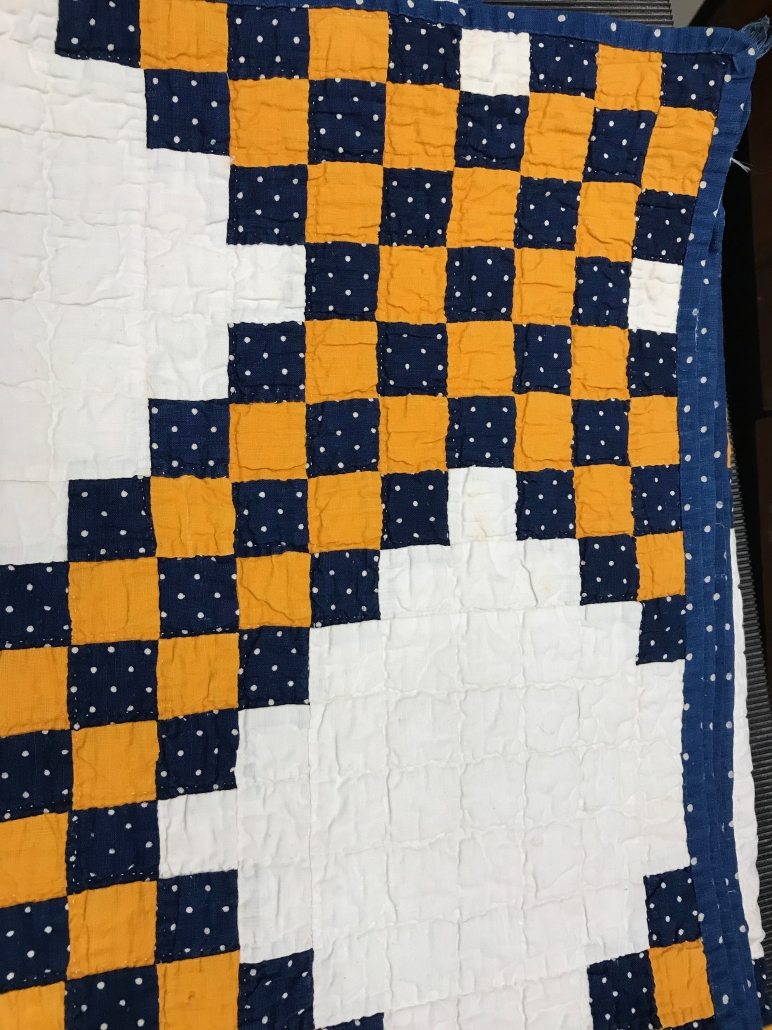
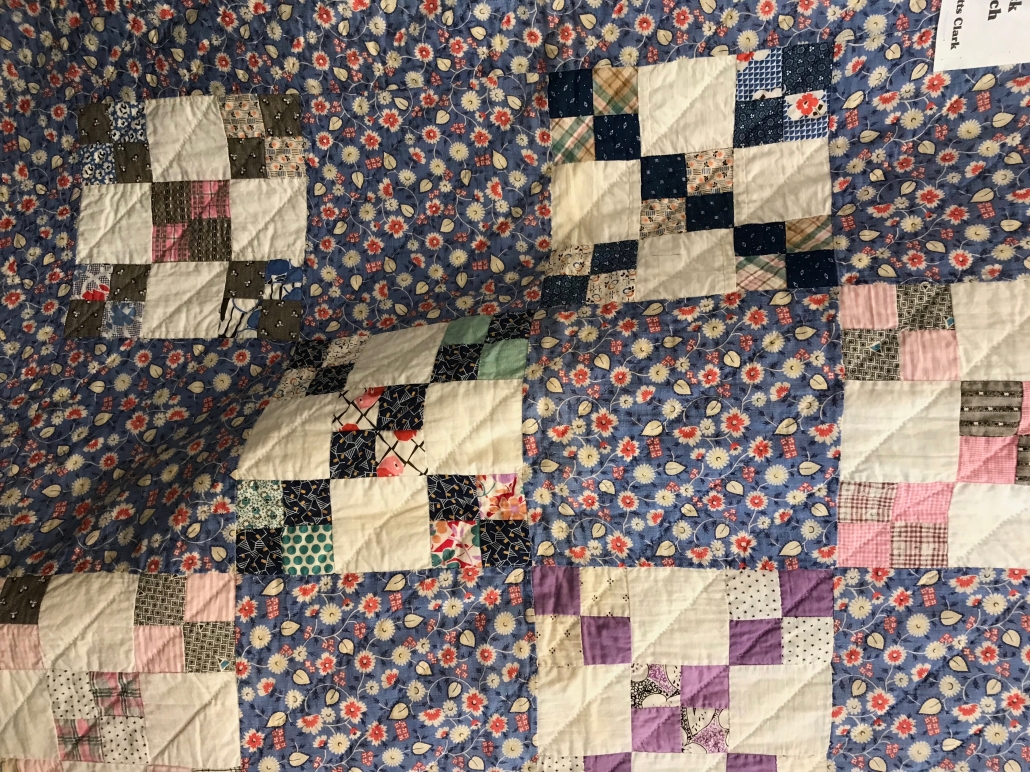
Settlers lived a rugged pioneer type of life for many years. Their cabins and small settlements were mere niches in the great forest that covered hills and valleys. The men hunted deer, rabbits, squirrels, wild turkeys, and pigeons for food. As soon as enough land was cleared, they planted corn, potatoes, wheat, hops for yeast, flax, and tobacco. Women made quilts, wove wool and flax into cloth, made the family clothes, carried water from a well or a stream, cooked food on open fireplaces, raised the children, and nursed them when they were sick.

By the time Nashville was incorporated in 1872, water-powered grist mills and sawmills were scattered over the county. Each village served its own locality with at least one general store, a blacksmith shop, a church, and a post office. A doctor, sometimes more than one, lived in almost every village. In 1881 there were 20 doctors in the county, and 37 churches – Methodist, United Brethren, Baptist, Christian, Presbyterian, and New Light. Money continued to be scarce and much business was conducted by the barter system. The first schools were built of logs, but by 1872 one-room frame schoolhouses dotted the county; in 1900 there were 73.

People farmed but they depended on forest products for cash. Lumber was taken to Indianapolis, also tan bark, cross ties, hoop poles, and barrel staves. The trees were cut recklessly and this led to deep trouble. Since there was not enough farmland on the ridgetops and in the creek bottoms, trees were eliminated on the sides of hills. Wheat and other crops were planted, and erosion began in earnest. By 1900 soil was so completely washed from hillsides and creek bottoms that crops could not be grown. Poverty was widespread and people began to leave the county in droves. Cabins all over the hills and valleys stood empty. In 1890, 10,308 people lived in Brown County. By 1930 only 5,168 remained. Not until 1980 did the population exceed the 1890 figure.

In 1900 villages were still the centers of Brown County life. Travel by horseback, wagon, or carriage was exceedingly limited due to deeply rutted, rocky roads. There were people in remote areas who never made a trip to Nashville in their entire lives. Many a family’s only contact with the outside world was the huckster’s weekly visit with his horse and wagon. As a result, the pioneer way of life continued long after other counties had adopted a new pattern of living.

Then came a period of rapid change, and Brown County opened to the world.

In 1905 the Illinois Central Railroad built a line from Indianapolis to Effingham, Illinois. The line ran from Morgantown across the southwest corner of Jackson Township. Helmsburg was the main station. Two trains a day from Indianapolis, and two from Effingham, brought freight, mail and passengers. Horse-drawn hacks took people, and wagons transported mail and freight from the station to Nashville. At long last there was an easy and quick way in and out of the county.

The first cars appeared in Nashville in 1913 and 1914. Their use was strictly limited because of the very bad roads, but by necessity as the number of cars increased, county roads were gradually improved. By 1935 State Road 135 north from Nashville to Morgantown had been built and in that year was hard-surfaced; State Road 46 between Bloomington and Nashville was worked on extensively until it was considered one of the best gravel roads in the state. Some years later it was hard-surfaced. Access to the county had become adequate for cars and trucks.

A colony of superb artists was drawn to Brown County. In 1907 T.C. Steele built a home near Belmont, and Adolph Shulz came to Nashville. Will Vawter, V.J. Cariani, Marie Goth, C. Curry Bohm, Dale Bessire, and many others also moved to Nashville; and in that small village of 323 people The Brown County Art Gallery opened its doors to the public in 1926. In 1954 a larger gallery was built on East Main Street, and an Art Guild established a gallery in the old Minor House on Van Buren Street.

The Brown County State Park opened in 1931 offering many advantages: a lodge, cabins for rent, picnic areas, a swimming pool, and miles of trails. And at present there is Yellowwood State Forest, the Hoosier National Forest, Lake Monroe, and Lake Lemon.

These changes and additions have brought tourists literally by the millions to Brown County. Scores of shops have opened to entice tourist trade. Restaurants and motels cater to tourist needs.

And Brown County has become a recognized and valued retirement center.

At present there are 232 productive farms. The erosion that drove people out of the county has been almost entirely eliminated. Improved farming methods and reforestation have solved the problems with the help of government agencies, such as the Agricultural Stabilization and Conservation Service.

During the Centennial celebration of the founding of Brown County in 1936, when for the first time oxcarts were no longer a familiar sight, it was generally agreed that the county had come out of the wilderness. Certainly there has never been a return to the former isolation.
Abe Martin

The Legacy of Abe Martin

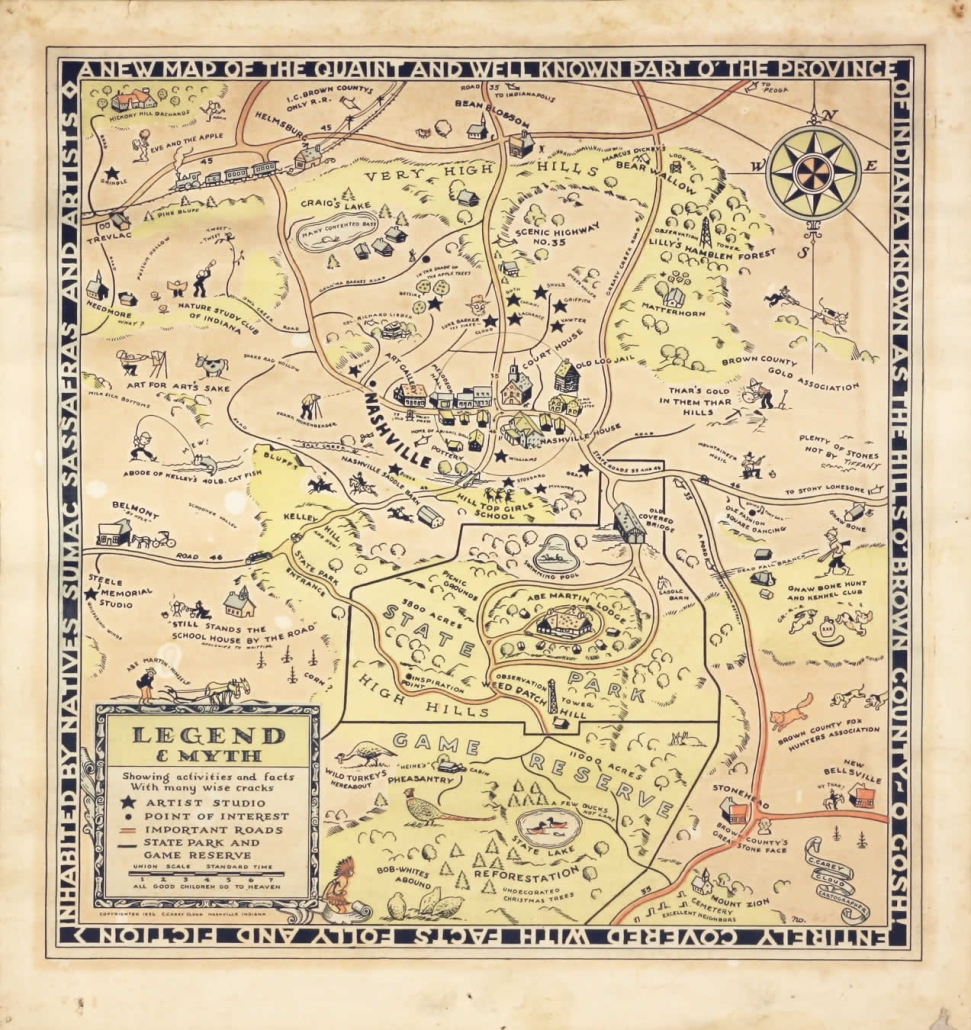
A cornerstone of our local lore is the famous cartoon character Abe Martin, created by Kin Hubbard. First appearing in the Indianapolis News on December 17, 1904, Abe was a beloved country sage known for his homespun philosophy in Hoosier dialect. Hubbard selected Brown County as Abe’s fictional home because of its “rugged almost mountainous, wooded section”. Today, Abe Martin is immortalized by the lanky figure on the sign greeting visitors entering Nashville , and his legacy continues at the Abe Martin Lodge in the nearby state park.

Brown County Indiana

Join Our Mission

Help us keep Brown County’s history alive by becoming a member of the Historical Society! Membership benefits include:

  • Informative and educational meetings throughout the year.
  • A subscription to our quarterly Society newsletter.
  • A 10% discount on any gift shop purchase.
  • Association with others interested in historic preservation.

Annual dues are payable January 1 of each year. Memberships are highly affordable, starting at $10 for Students (under 18) and Pioneer Women, $20 for Individuals, and $35 for Families.

© 2026 - Brown County Historical Society, All Rights Reserved